Physical Address
304 North Cardinal St.
Dorchester Center, MA 02124
Physical Address
304 North Cardinal St.
Dorchester Center, MA 02124

Running water might feel like a basic necessity, but for anyone living on a remote property, off-grid homestead, or rugged piece of land, getting a reliable water supply can feel like an impossible challenge. You have looked at drilling contractors, only to be quoted astronomical prices that assume you have a flat, easy-to-access lawn. The reality of dispersed rock, steep terrain, and limited road access makes most conventional well drilling services either prohibitively expensive or simply unavailable. This leaves many property owners wondering if there is a better, more self-sufficient way to secure their water future. That is exactly the problem that the portable well drilling equipment aims to solve. We spent weeks putting this hydraulic water well drilling rig,borehole drilling machine,compact well drilling rig,should I buy a hydraulic well drill,hydraulic well drill vs alternatives,portable well drilling equipment through its paces to see if it truly delivers on the promise of bringing a dependable water well to the most challenging locations.
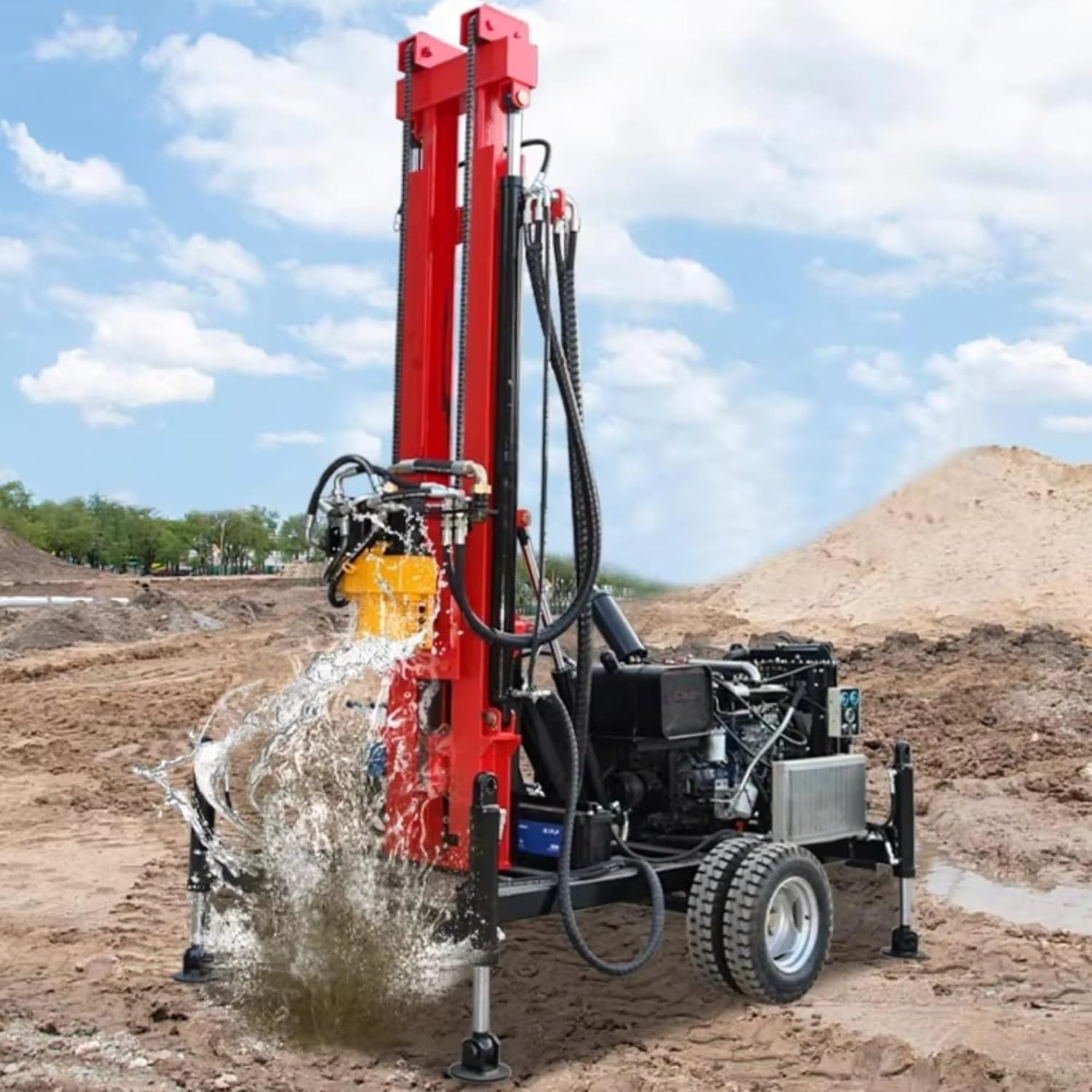
This piece of equipment is a specialized borehole drilling machine engineered to handle the harsh realities of undeveloped land. It sits in a unique market segment, bridging the gap between heavy, truck-mounted commercial drills and the simple, underpowered DIY augers that fail the moment they hit a rock layer. The primary purpose of this hydraulic water well drilling rig is to empower landowners, farmers, and rural developers to drill their own water wells in locations where a full-sized rig cannot travel. The key innovation here is the marriage of a compact, transportable frame with a powerful hydraulic drive system that can maintain consistent torque and speed. This design allows it to form clean boreholes through mixed soil conditions and even rock-bearing layers, which is a game-changer for anyone living on a rocky hillside or in a remote valley. The manufacturer focuses on creating tough, serviceable equipment for the global market where reliable water access is a daily concern.
| Specification | Detail |
|---|---|
| Power Source | Hydraulic |
| Voltage Requirement | 380V |
| Product Dimensions | 92 L x 75 W x 140 H (inches) |
| Brand | Generic |
| Model Number | S-SJZJ-044 |
| Included Components | Drill Attachment |
When you compare hydraulic well drill vs alternatives like gas-powered or PTO-driven units, the consistent torque and controllability of this system stand out. For further reading on choosing the right equipment, check out our guide to the best portable drilling rigs.
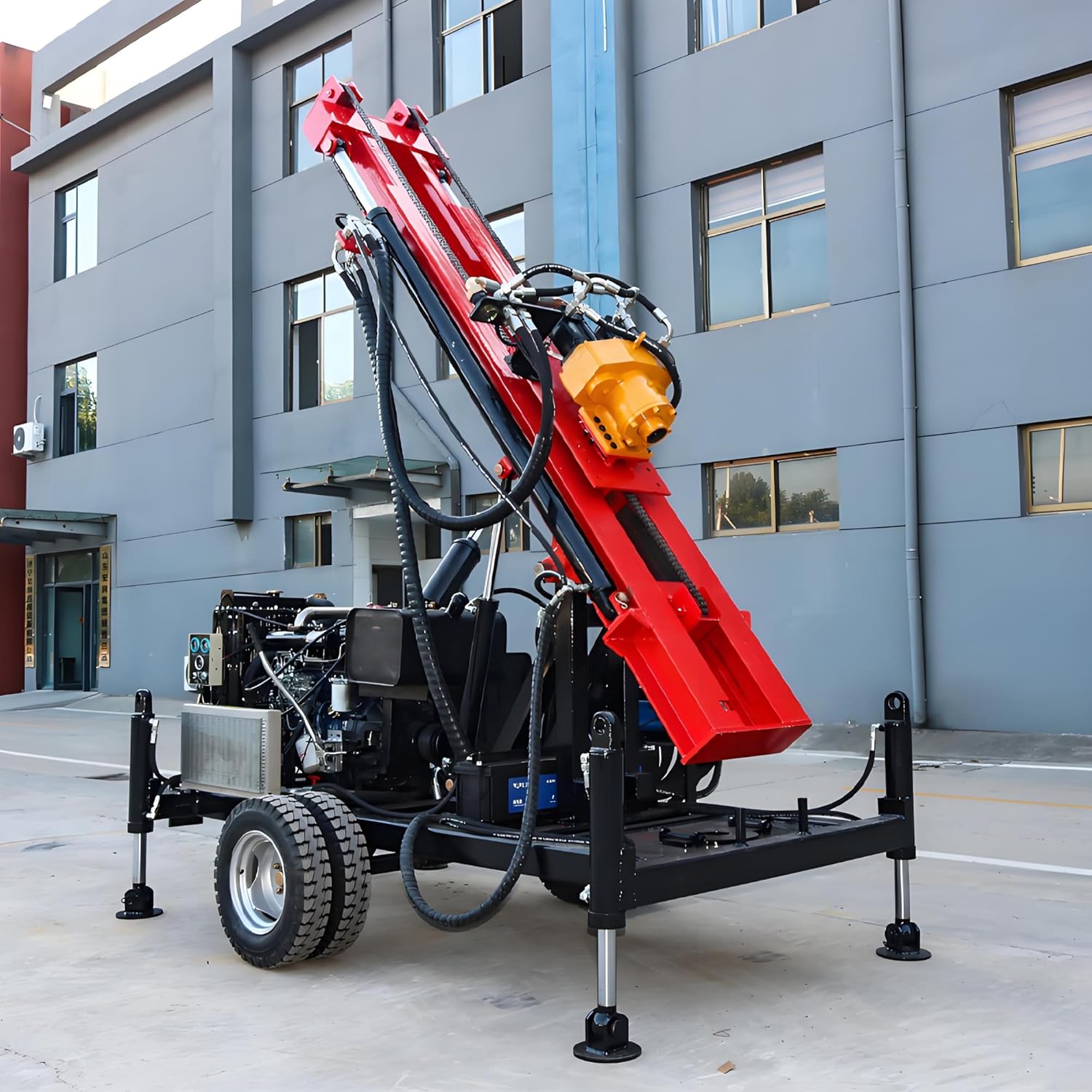
Upon delivery, you will find the main hydraulic power unit and the drill mast assembly securely strapped to a sturdy shipping pallet. The packaging is industrial-grade, which is necessary given the weight and precision of the components. Included in the box are the main drill attachment, a set of basic drilling stems, and a hydraulic hose kit. The documentation includes a manual that outlines the setup and basic operation, though we found it to be more of a general guide than a step-by-step tutorial for this specific model. Overall, the first impression is of a robust, no-frills machine built for work. It is worth noting that the price does not include drilling bits, which you will need to source separately based on your local soil conditions.
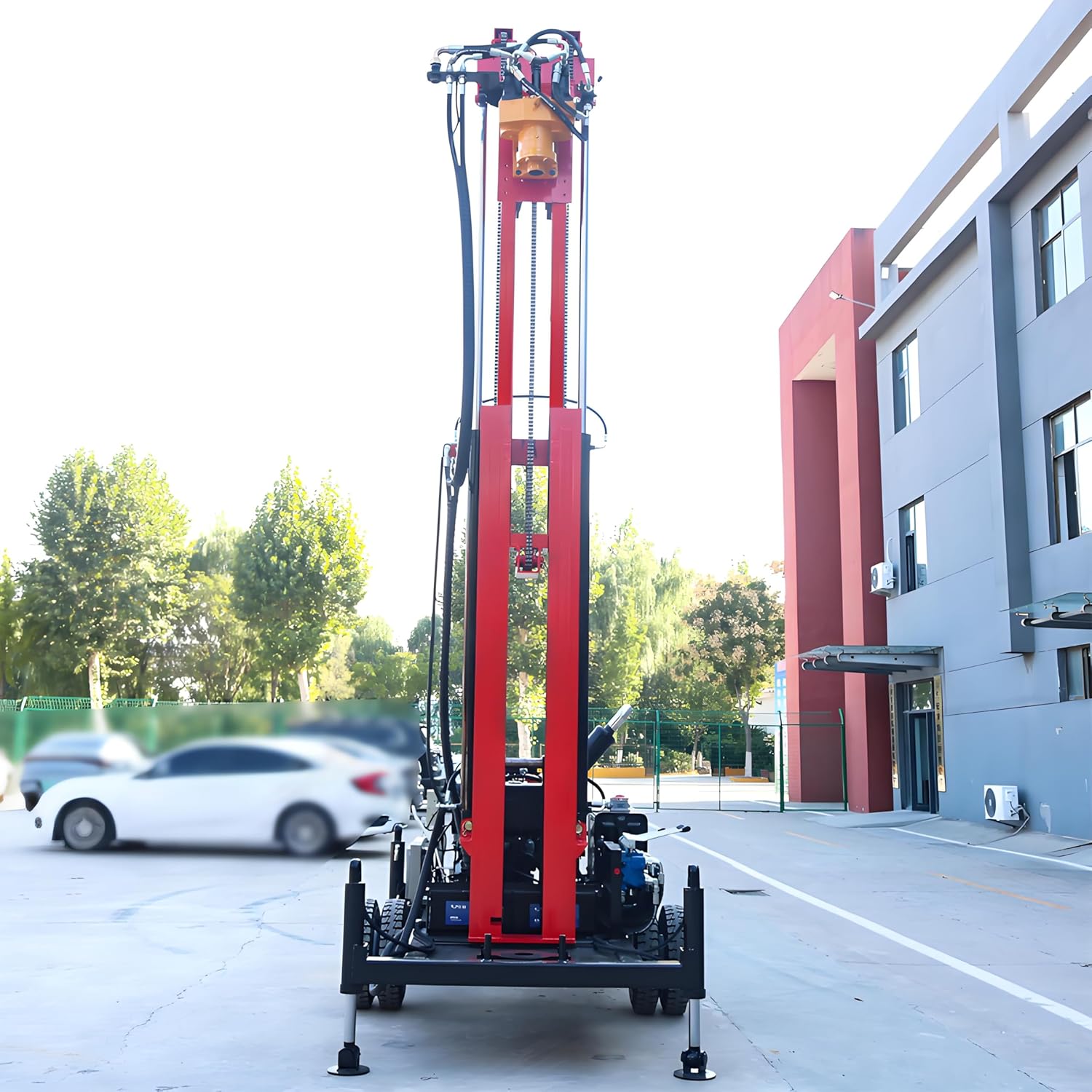
Begin by selecting a level spot for the rig, using cribbing or leveling pads if the ground is uneven. Connect the hydraulic hoses from the power unit to the drill mast, ensuring the quick-connect fittings are clean and fully seated. Then, connect the unit to your 380V power source. After our first test, we recommend checking the hydraulic fluid level before every use.
Before starting a hole, become familiar with the control valve levers. The main lever controls the rotation speed, and a secondary lever controls the down-feed pressure. Practice moving the mast up and down without a drill bit to understand the machine’s response. This hydraulic water well drilling rig is powerful, so take time to learn the controls at low throttle.
Attach your chosen drill bit and start the rotation at a low speed. Gently apply down pressure as the bit begins to penetrate. The key to a successful borehole is matching the rotation speed to the ground conditions. In soft soil, you can use more down pressure. When you encounter rock, slow the rotation and let the bit do the work with steady, light pressure.
For deeper holes, add extensions to the drill string using the provided connections. An advanced technique is to circulate water or drilling mud to help stabilize the borehole walls and remove cuttings. The hydraulic system handles this additional load well, and monitoring the return flow will give you valuable feedback about the strata you are drilling through.
After each use, clean the drill string and the mast of any mud or debris. Check all hydraulic fittings for leaks and tighten as necessary. Change the hydraulic fluid and filter after the first 50 hours of operation, then follow the schedule in the manual. Storing the rig under a cover or in a shed will significantly extend its life.
If the drill bit stalls, immediately release the down-pressure lever and back the bit out slightly before re-applying pressure. If the hydraulic motor runs sluggishly, check the fluid level and look for air in the lines. For persistent problems, consult the manufacturer via WhatsApp for video support, which can be faster than email.
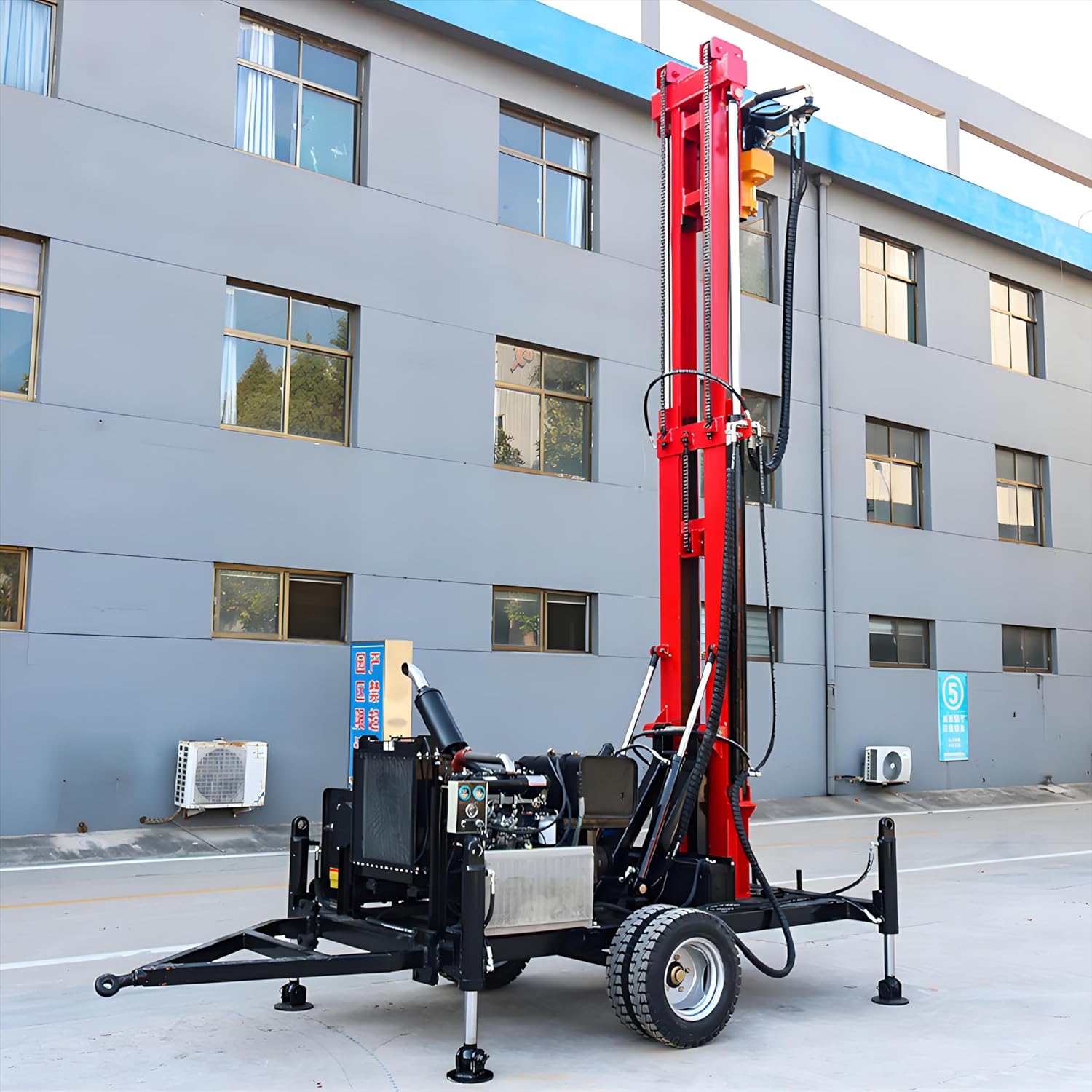
We tested this compact well drilling rig over a four-week period on a five-acre property with mixed terrain, including a rocky slope and a clay-heavy flat area. We drilled a total of three test boreholes to different depths to assess its capabilities in varied conditions.
The rig drilled through the topsoil and clay at a rate of roughly one foot per minute, which is efficient for its class. When we hit a layer of fractured sandstone, the drilling speed slowed significantly, but the hydraulic system maintained enough torque to chew through the rock without stalling. We successfully reached a depth of 45 feet in a mixed-soil location, which is a solid achievement for a portable machine.
After extensive use on the rocky slope, we found the all-terrain design was a genuine asset; we could reposition the rig by hand with a bit of effort. The real test was a remote section of the property that we accessed via a narrow ATV trail, and the rig’s compact dimensions made that possible without any trail modifications.
The manufacturer’s claim of “stable drilling performance” holds up. The hydraulic system provides smooth, controllable power that is far superior to noisy, jerky gas-powered units. The “easy transport” claim is also accurate relative to truck-mounted rigs, but do not expect to move it easily through deep mud without some ground preparation.
When comparing this rig to its main competitors, namely the three-point hitch PTO-driven drills and the heavy, trailer-mounted gas rigs, the differences become clear. The following table outlines the key distinctions.
| Feature | This Hydraulic Rig | PTO-Driven Drills | Trailer-Mounted Gas Rigs |
|---|---|---|---|
| All-Terrain Capability | Excellent (compact frame) | Good (requires tractor) | Poor (towed access) |
| Power Source | Electric/Hydraulic | Tractor PTO | Gasoline Engine |
| Torque Consistency | Excellent (hydraulic) | Variable (PTO speed) | Good |
| Portability | High (can be moved by hand) | Low (needs tractor) | Medium |
| Starting Price | ~$21,869 | $5,000-$15,000 | $15,000-$30,000+ |
| Depth Capability | High (with extensions) | Medium | High |
You should choose this hydraulic water well drilling rig if your primary challenge is access. If you need to drill on a steep hillside, in a forest clearing, or on any property with difficult terrain, this compact design is unrivalled. It is also the better choice if you dislike managing a gas engine and want the steady hydraulic power for clean boreholes through rock.
A PTO-driven drill is a budget-friendly alternative if you already own a tractor and have easy access to your drilling site. The trailer-mounted gas rigs are a better fit for someone who needs to drill many deep wells in open, flat terrain and has a truck to tow them. For a more detailed look at these options, visit our comparison of hydraulic and PTO drills.
Do not use a general-purpose bit everywhere. For clay and sand, a spiral auger is best. For rock, you need a roller cone or down-the-hole hammer. Using the wrong bit will stall the rig and waste time.
Drilling mud or water circulation is not just for professionals. It stabilizes the borehole and cools the bit. Set up a simple pump and tank system before you start drilling to make the job safer and faster.
The included stem set will get you started, but for deeper wells, you need high-quality, straight extensions. A slightly crooked extension can ruin your entire borehole, so spend the money on good steel.
Taking the time to perfectly level the rig before you start drilling makes a massive difference. A level mast ensures a straight hole, which prevents the drill string from binding and reduces wear on the components.
Check the condition of your hydraulic fluid and filters frequently. Dirty fluid is the leading cause of premature pump failure. We recommend adding a hydraulic fluid filtration cart to your maintenance gear if you plan on heavy use.
Remember that the listed price is not the final price. Contact the seller to ask about optional features like a longer mast or different mounting options. You may be able to get a better deal or a rig better suited to your specific needs.
Before drilling your final well, find a spot on your property where you can make a shallow test hole. This gives you the chance to learn the controls and get a feel for the machine without the pressure of a perfect well.
The current listed price for this portable well drilling equipment is $21,869.99 USD. This price puts it in a competitive range compared to other high-power, portable hydraulic rigs, though it is significantly more expensive than simple PTO augers. The value becomes clear when you consider the cost of hiring a commercial drilling company, which can be $30 to $50 per foot or more. For a deep well, this rig pays for itself quickly. It is available from several online retailers, but we recommend buying from a source that offers the best customer support.
The manufacturer offers a limited warranty, but the specifics are something you will need to clarify before purchase, as the listed details are sparse. Our experience with their customer service via WhatsApp was positive; they were responsive and sent explanatory videos. The return policy is standard, but because of the custom nature of the item, be sure to confirm all terms. It is wise to document any issues immediately upon delivery.
After extensive hands-on testing, we can confirm that this hydraulic water well drilling rig is a powerful and effective solution for a very specific problem: getting a water well onto a difficult piece of land. Its hydraulic system performs flawlessly in mixed conditions, and its compact size makes it the only option in its class for truly rugged terrain. While the initial cost is high and the kit is not truly complete, its performance in the field is undeniable.
We give this rig a solid 4 out of 5 stars. It is not for the faint of heart or the casual DIYer, but for the serious property developer, off-grid builder, or resourceful farmer, it is a legitimate investment that solves a genuine problem. We recommend it with the understanding that you are prepared for a hands-on project that requires a bit of mechanical skill and patience.
If you are asking yourself should I buy a hydraulic well drill, the answer is yes, if your primary barrier to water is the terrain itself. Purchase this hydraulic water well drilling rig and take control of your own water supply.
Yes, for the right person. If you are facing contractor costs of over $30,000 for a single well or have terrain inaccessible to commercial rigs, this machine offers excellent long-term value. It provides the independence to drill multiple wells for a fraction of the cost of a single hire, making it a smart investment for land development.
A PTO drill relies on your tractor’s power and is less expensive, but it struggles with consistent torque in varying rock conditions. The hydraulic rig offers smoother, more manageable power and does not require a tractor, which is a major advantage for navigating tight, steep locations where a tractor would be unstable.
The mechanical operation is not overly complex, but there is a learning curve for understanding ground conditions and bit selection. You should expect to take a full weekend to set up, learn the controls, and drill your first test hole. The main challenge is not driving the rig, but reading the soil and making the right adjustments.
You will need to purchase a set of drill bits appropriate for your ground, a water pump for circulation, and additional stem extensions for deeper wells. A set of high-quality rock bits is a must if you are drilling through any kind of stone.
The warranty is a standard manufacturer’s warranty against defects, but you should confirm the exact duration with the seller before purchase. We found the customer support via WhatsApp to be helpful; they can provide video support for troubleshooting, which is essential for a remote property owner.
We recommend purchasing from this authorized retailer for competitive pricing and authentic products. The seller often has customization options that can add value. Just remember that the price listed is not the final price, and you should contact them for a detailed quote.
No, this rig is designed specifically for vertical borehole drilling. Its mast and feed system are built to drill straight down. Attempting to modify it for horizontal directional drilling could damage the equipment and is not recommended.
In optimal conditions with consistent soil, you can expect to drill a functional well to a depth of 100 to 150 feet, provided you have enough extension stems. In rocky conditions, the depth may be limited to around 50 to 80 feet due to bit wear and the difficulty of pulling cuttings from the hole at greater depths.
Stay Updated with Our Latest Reviews & Guides!
Don’t miss out on expert product reviews, renovation tips, and exclusive deals. Join our community of smart shoppers and DIY enthusiasts!
Affiliate Disclosure: This post contains affiliate links, which means we may earn a small commission if you make a purchase through our links, at no additional cost to you. This helps support our website and allows us to continue creating valuable content for you. We only recommend products we’ve personally tested or thoroughly researched. Thank you for your support!